Eight kilometers that changed history: how an ancient eclipse helped scientists
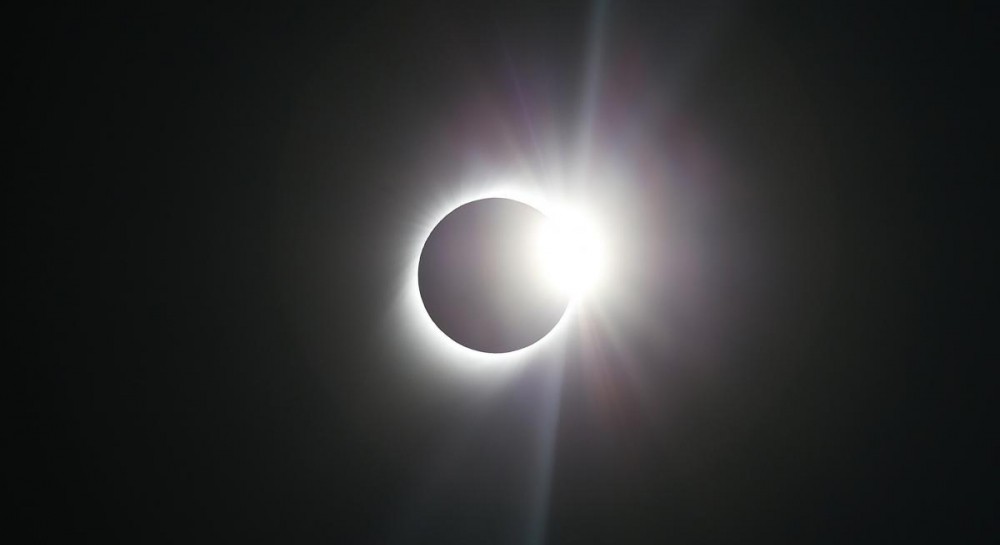
Researchers from Nagoya University have pinpointed the location of the ancient capital of the Lu state by re-evaluating records of a solar eclipse from 709 BC.
 🎭Culture & Sport
Photo: UNIAN
Key points
- Refining the location of the ancient Lu state capital
- Analysis of the 709 BC solar corona record
- Using eclipses to study Earth's rotation
Ancient Chinese chronicles describing a total solar eclipse in 709 BC have long posed a challenge to researchers. According to historical records, astronomers of that era documented not only the darkening of the Sun but also a yellowish glow around it, which may be one of the earliest descriptions of the solar corona in history.
A coordinate error
Modern astronomical calculations long failed to align with historical data: the city of Qufu, previously considered the observation site, did not fall within the path of totality. However, Japanese researchers discovered that the ancient capital of the Lu state was actually located 8 kilometers away from the modern city.
This small distance proved decisive. From the actual location of the capital, astronomers could observe the total solar eclipse, allowing them to witness the corona. Had the observations been made from a different point, the bright crescent of sunlight would have made this impossible.
Beyond historical accuracy, this study holds significance for modern science. By using data on ancient celestial phenomena, scientists can better model the Earth's rotation slowdown, helping to refine mathematical models of our planet's movement.
Source UNIAN — unian.ua/science/lishe-8-kilometriv-viddilyali-vchenih-vid-rozgadki… ↗
Read next
Stepan Burban concludes his 'Quiet Tour' with final concerts in Lviv
The music project Palindrom has announced the end of its acoustic tour with two final performances in Lviv this December.
 👥Society
Global Environmental Threat: Rapid Expansion of Sargassum Seaweed in the Atlantic
Scientists report a record-breaking expansion of brown seaweed in the Atlantic Ocean, posing a significant challenge to marine ecosystems and the climate.
 🏙️City
How to check the battery of a used smartphone before buying
A quick guide on how to verify the battery health of a second-hand smartphone to ensure you are getting a reliable device.
 🏙️City
Zelenskyy responds to Trump's 'friend' remark about Putin
President Volodymyr Zelenskyy addressed Donald Trump's comment calling the Kremlin leader his friend, reiterating that for Ukraine, Putin remains an enemy and a murderer.
 🚨Events
Moldova's Airspace Violated by Drones Twice in 24 Hours
Moldova reported two separate incidents of unidentified drones entering its airspace from Ukraine within a single day. Local authorities have confirmed the border crossin…
 💡Tech
Joaquin Phoenix stars in surreal campaign for new tech-focused eyewear
Actor Joaquin Phoenix features in a seven-minute short film directed by Jonathan Glazer to promote the new Intelligent Eyewear collection.