Global Environmental Threat: Rapid Expansion of Sargassum Seaweed in the Atlantic
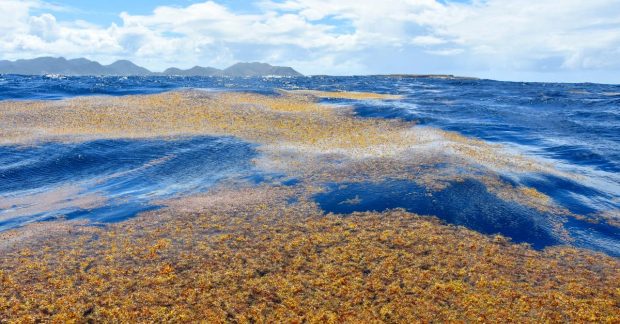
Scientists report a record-breaking expansion of brown seaweed in the Atlantic Ocean, posing a significant challenge to marine ecosystems and the climate.
 👥Society
Photo: UNIAN
Key points
- Record-breaking 8,850 km seaweed belt
- Excess nitrogen and phosphorus as primary growth drivers
- Release of toxic hydrogen sulfide during decomposition
- Call for international monitoring of the ecological situation
Scientists are raising concerns over the anomalous growth of pelagic sargassum in the Atlantic Ocean. According to recent data, the belt of seaweed stretching from the coast of Africa to the Gulf of Mexico has reached a record length of 8,850 kilometers. A phenomenon that was virtually unknown 15 years ago has now evolved into a major environmental issue.
Causes and Consequences of the Anomaly
Researchers explain that the rapid proliferation of the seaweed is driven by an excessive influx of nitrogen and phosphorus. These nutrients enter the ocean both through natural processes and human activity, such as agricultural runoff and sewage discharge. In such nutrient-rich conditions, the mass of sargassum can double in just 11 days.
While sargassum serves as an important habitat for many marine species, its excessive volume is becoming hazardous. When massive amounts of seaweed wash ashore, they decompose, releasing toxic hydrogen sulfide and methane. This not only damages tourism infrastructure and local economies but also creates "dead zones" in the ocean that destroy coral reefs.
Source UNIAN — unian.ua/ecology/sargasovi-vodorosti-v-atlantici-chomu-gigantskiy-p… ↗
Read next
 🚨Events
Electricity Restored in Rivne Region After Russian Attack
Electricity has been restored in the Sarny district of the Rivne region after a Russian attack on November 20. More than 50 settlements were left without power.
 🛡️Security
Estonia comments on incident involving Russian vessel in Gulf of Finland
Estonian authorities have reaffirmed Ukraine's right to self-defense, dismissing security concerns regarding their own territory following the incident in the Gulf of Fin…
 🛡️Security
Miracle under the rubble: 89-year-old woman rescued in Kyiv region following enemy strike
Rescue workers in the Kyiv region's urban village of Dymer have pulled an 89-year-old woman alive from beneath the ruins of a destroyed apartment building. Meanwhile, the…
 🛡️Security
Russian corvette 'Mercury' damaged in Libya: suspected Ukrainian drone attack
According to the Associated Press, an explosion occurred on board a Russian warship in the port of Benghazi, which may have been caused by a naval drone strike.
 🏛️Politics
Russian Provocations in NATO Airspace: Military Expert Assessment
Retired Ukrainian Colonel Dmytro Kashchenko argues that Russian missile and drone incursions into NATO airspace are calculated tests of the Alliance's defensive response …
 💡Tech
Global warming: Scientists revive 40,000-year-old bacteria from permafrost
Researchers from the University of Colorado have found that ancient microorganisms are capable of rapid growth when temperatures rise.